
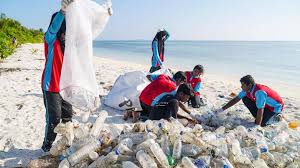
The EU-supported PROMISE project (2020–2024) is one of the strongest efforts so far to tackle marine litter in Lakshadweep. Through the SWITCH-Asia program, the project works closely with local tourism-based MSMEs, helping them shift to more sustainable business practices. This includes cutting down on single-use plastics, promoting circular economy methods, and offering training sessions for resort staff and community members. These activities have already shown some encouraging results. In the pilot islands, for example, early monitoring suggests a noticeable drop in plastic waste generation. Still, without a permanent waste management system, these improvements are difficult to maintain over time.
Right now, Lakshadweep depends on a waste export policy, where segregated waste is shipped to the mainland. Although this temporarily helps reduce local waste build-up, it is expensive and adds to carbon emissions, making it less practical as a long-term solution. At the same time, research carried out by CUSAT and other scientific institutions has helped deepen the understanding of microplastics in the region’s waters. However, these studies often lack ongoing support, so the data they generate cannot consistently guide long-term planning.
PROMISE has also invested in public outreach, which has increased awareness about plastic pollution and the importance of sustainable tourism. But awareness alone has not yet led to widespread behavioural change among residents, tourists, or tourism operators. This gap shows how challenging it is to shift daily habits without stronger systems in place.
Overall, the PROMISE project is an important step forward for Lakshadweep. It has brought attention, resources, and early progress. However, its mixed results also make it clear that real, long-lasting change will require stronger institutions, steady funding, and a more reliable waste management framework that can support the islands well into the future.