
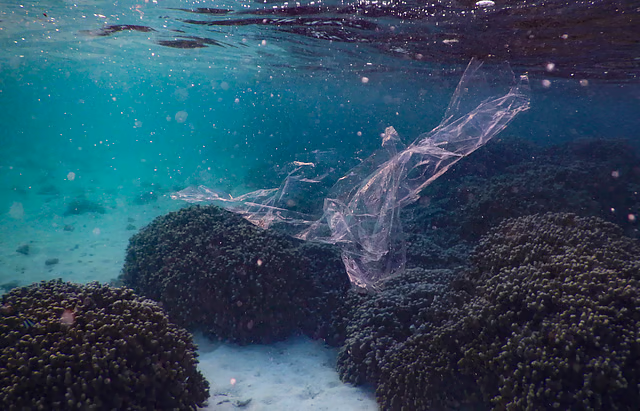
Tourism-related pollution in island environments has long been a concern in environmental research, and recent studies increasingly highlight microplastics as a serious emerging threat. In Lakshadweep, this issue has gained particular attention as scientists continue to document the growing impact of plastic contamination on delicate marine ecosystems. Marimuthu et al. (2022) provide clear empirical evidence of coral stress, reduced reef resilience, and biodiversity loss across several atolls, directly linking these ecological changes to human activities such as tourism, waste mismanagement, and coastal disturbances. Their work underscores how human pressure is pushing an already fragile reef system closer to ecological tipping points.
Complementing this, Vaid (2021) offers a broader review of microplastic contamination in Indian waters, highlighting the fragmented nature of current policy responses. The study emphasizes that despite rising awareness, India lacks an integrated national strategy for monitoring, regulating, and mitigating microplastics, leaving regions like Lakshadweep particularly vulnerable.
Recent research featured on ScienceDirect (2025) adds further detail by quantifying ecological risk indices associated with microplastic accumulation in Lakshadweep’s coastal zones. These studies identify polyethylene (PE) and polypropylene (PP), commonly used in packaging and tourism products, as the most dominant polymer types found in lagoon and reef environments. Their prevalence points directly to local consumption patterns and waste disposal challenges.
Media reports, such as those from The Times of India (2025), also highlight the significant role of tourism-generated single-use plastics in worsening the pollution problem. Items like water bottles, food packaging, and disposable toiletries frequently enter the waste stream, overwhelming the islands’ limited disposal capacity.
In response, the PROMISE project (European Union SWITCH-Asia, 2024) has attempted to tackle these issues by working with tourism enterprises, community groups, and local authorities. Its initiatives focus on reducing plastic use, improving waste segregation, and promoting sustainable alternatives. Taken together, this body of literature establishes a strong scientific and policy foundation for understanding Lakshadweep’s microplastic crisis and evaluating ongoing interventions.